
Reading List
Page-Turners: The Kindle Books Everyone Is Reading Right Now
From thrillers to feel-good fiction, the reads people can't put down.
This content was generated using AI and is based on content from Best Sellers in Kindle Store. Prices and availability may change.
We'll be the first to admit that a bestseller list is, at its core, a document of desire, telling us less about literary excellence than about what millions of readers urgently wanted on a given Tuesday. And yet, sorting through the current Kindle rankings, we found ourselves genuinely absorbed, even occasionally delighted. The thirty titles below span the full emotional register of popular fiction, from brooding fantasy epics to tightly wound domestic thrillers to romances that take their readers' intelligence seriously. Commerce and craft are not, it turns out, always strangers. What follows is the list itself, which we invite you to judge with whatever combination of snobbery and pleasure feels right to you.
Click any cover to view on Amazon






-
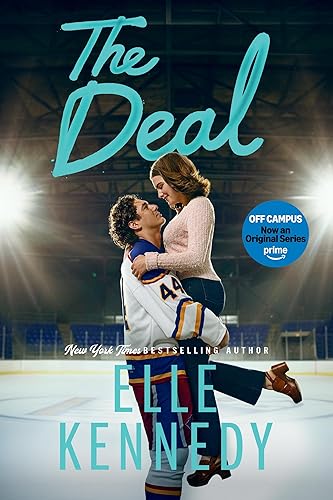
Elle Kennedy's New Adult romance arrives with a pleasingly transactional premise: a studious girl and a hockey star strike a fake-dating bargain, each needing something the other can provide. Kennedy is shrewd enough to know that readers come for the slow burn, and she obliges without condescension. The campus setting feels lived-in rather than decorative, and the dialogue crackles with a self-awareness that keeps the sweetness from cloying.
-
The second Off-Campus installment pivots to a hero whose charm is his liability, a setup that could easily calcify into formula. Kennedy resists the obvious arc, letting her characters make genuinely poor decisions before earning their resolution. What distinguishes the series is its refusal to punish women for wanting things, romantic or otherwise, a stance that reads as quietly radical within its genre.
-
Samanta Schweblin's novella operates like a fever you cannot quite place, narrating an unnamed woman's unraveling across a rural Argentine landscape saturated with ecological dread. The tension between the pastoral and the poisoned is relentless, and Schweblin's structure, a deathbed interrogation moving forward and backward simultaneously, makes the horror feel both inevitable and elusive. Few books this short leave such a persistent residue.
-
By the third Off-Campus novel, Kennedy has refined her formula into something approaching genuine sophistication. The Score gives us a commitment-phobe confronted with a woman who matches his indifference and raises it, a dynamic that generates considerably more heat than the usual chase. Kennedy understands that the most convincing romance is built on mutual recognition, not conquest, and the distinction shows.
-
Divorce as romantic catalyst is a premise requiring careful handling, and the degree to which this novel succeeds depends on its willingness to honor the grief alongside the comedy. The best entries in this particular subgenre understand that a marriage ending is never only a liberation, and readers drawn to emotional complexity will want to assess whether this one earns its happy resolution or simply declares it.
-
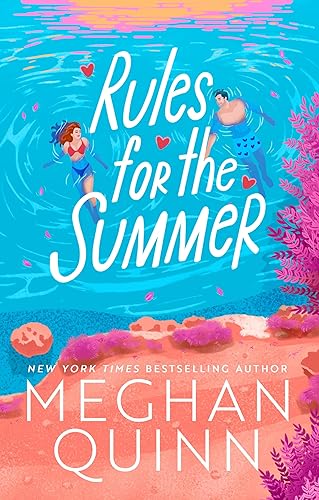
Summer romance has its own grammar, all compressed timelines and manufactured intimacy, and this novel deploys both with evident affection for the mode. The rules of the title suggest a structured negotiation, which is a smarter entry point than accidental proximity. Whether the book ultimately trusts its premise or retreats into sentiment is the question that will determine its staying power beyond the beach bag.
-
A GMA selection, Yesteryear announces itself as literary fiction for a broad audience, which is a description that can mean almost anything. The novel's ambitions appear to center on memory and inheritance, perennial concerns that live or die by the particularity of the prose. Readers who have found similar prestige fiction too cautious may discover here either a welcome accessibility or a frustrating retreat from difficulty.
-
Dark fantasy romance occupies a crowded corner of contemporary genre fiction, and Crown Me Dead enters with the requisite dangerous courts and morally compromised love interests. The duet structure promises a more sustained narrative than the serial installment model allows, which is a meaningful distinction for readers exhausted by artificial cliffhangers. Whether the darkness here is atmospheric or substantive will depend on how seriously the author takes her own world's stakes.
-
Matt Dinniman's LitRPG novel follows a man and his cat trapped inside a lethal, game-structured dungeon, a premise that sounds absurd and commits to being exactly that while somehow also being genuinely tense. The genre convention of stat screens and level-ups is deployed with more wit than reverence, and Carl himself is an appealingly unglamorous protagonist. The book understands that self-awareness is not the same as ironic distance, and it plays it straight.
-
Theo of Golden arrives wearing the quiet confidence of literary fiction that knows its own coordinates. Set in a place whose name implies both specificity and fable, the novel appears concerned with the kind of protagonist whose interiority is the primary landscape. Whether the Golden of the title is geography or aspiration is likely the question the narrative turns on, and readers with patience for character over plot will find the investment worthwhile.
-
Matt Dinniman's dungeon-crawler series has always treated its video-game-logic premise with more narrative seriousness than the genre typically demands, and the eighth installment suggests he has no intention of coasting. Carl and Princess Donut navigate an increasingly baroque gauntlet of catastrophes, but the real engine here is the accumulated weight of prior books, the way small character details return as structural load-bearing elements. Genre readers will recognize the escalation formula; what they may not expect is the genuine melancholy underneath.
-
Elle Kennedy's Off-Campus series made its reputation by taking college hockey romance seriously as craft, and the fourth entry, centered on a single father navigating desire and responsibility, is among the stronger entries. The tension between want and obligation is handled with more psychological nuance than the shirtless-athlete cover might suggest. Kennedy understands that the obstacle in a romance need not be melodramatic to be genuinely felt.
-
Kennedy returns to the Briar universe she established in Off-Campus, this time in a spinoff that trades on reader affection for the original world. Love Song follows musicians rather than athletes, a deliberate tonal shift that lets her explore a different register of ambition and self-sabotage. Whether the campus-romance scaffolding supports a new cast as well as the original remains the operative question, but Kennedy's ear for charged dialogue has not dulled.
-
Samantha Whiskey's Windy City series opens with Mile High, a sports romance set against professional hockey that wears its genre commitments without apology. The altitude metaphor does real thematic work, grounding a story about emotional risk in something pleasantly concrete. Readers who find the category's usual emotional reticence frustrating will appreciate that the protagonists here are permitted to be articulate about what they want, even when what they want frightens them.
-
15
Dear Debbie
Dear Debbie arrives formatted as epistolary correspondence, a structure that flatters the romantic comedy's traditional reliance on misunderstanding and withheld information. The conceit rewards patient readers, since the gap between what characters write and what they mean accumulates genuine ironic pressure. It is the kind of book that trusts its formal device to do narrative work, which places it in better company than its category shelving might initially imply.
-
Dire Bound opens Nora Ash's wolf-shifter series with enough worldbuilding confidence to distinguish it from the crowded paranormal romance field. The pack dynamics are treated less as fantasy decoration than as a genuine social system with political stakes, which gives the central romance something to press against. First entries in shifter series often sacrifice character interiority for exposition; Ash mostly avoids this, keeping her protagonist's perspective sharp even as the mythology expands.
-
The second Shield of Sparrows novel leans into the slow-burn designation with what one can only describe as structural commitment, deferring resolution across a considerable page count without losing forward momentum. Epic romantic fantasy lives or dies by the quality of its antagonist forces, and Rites of the Starling seems to understand this, building political tension alongside the personal. Readers who arrived for the romance will find the fantasy scaffolding has grown sturdy enough to carry its own weight.
-
The Graham Effect launched Kennedy's Campus Diaries series as a kind of spiritual successor to Off-Campus, and the opening gambit, enemies forced into proximity through institutional circumstance, is executed with the timing of someone who has studied the form carefully. Raleigh Graham is a more guarded protagonist than Kennedy's usual heroines, and the book is better for it, since guardedness gives a romance somewhere interesting to travel. The hockey milieu is by now Kennedy's native terrain, and it shows.
-
The Off-Campus series concludes with The Legacy, a book that faces the particular difficulty of all final installments, the obligation to honor accumulated feeling without tipping into sentimentality. Kennedy largely succeeds by keeping her focus on her characters' futures rather than their pasts, which is a harder tonal choice than it sounds. For readers who have followed the series from the beginning, there is real satisfaction here, earned rather than merely promised.
-
The concluding half of the Heartstring Duet arrives carrying considerable tonal weight, dark fantasy romance being a category that often collapses under the pressure of its own promised resolutions. Crown Me Yours distinguishes itself by treating its darker elements as morally consequential rather than merely atmospheric, which means the romance arrives freighted with real stakes. Duet structures live by their second acts, and this one earns its crown.
-
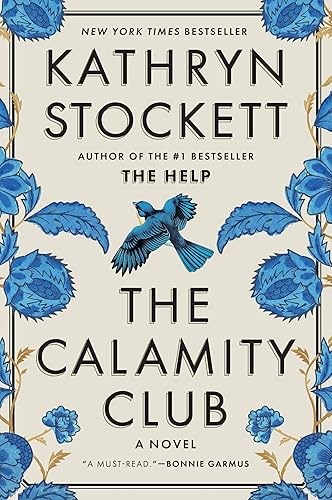
The Calamity Club arrives with the particular energy of a novel that knows exactly what it wants to be: a gathering of misfits whose collective dysfunction is, of course, the whole point. The ensemble format invites comparison to a dozen similar premises, but the execution here finds genuine wit in catastrophe. Think less disaster novel, more group therapy with higher stakes.
-
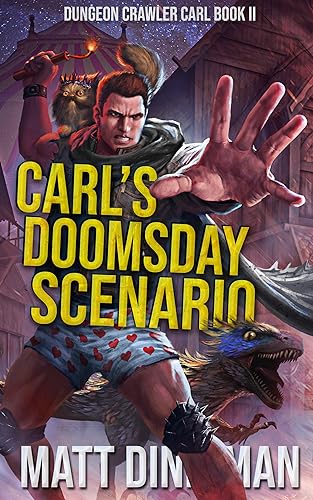
The second installment of the Dungeon Crawler Carl series doubles down on its foundational absurdity, pairing video-game mechanics with apocalyptic carnage in ways that somehow produce legitimate narrative tension. Matt Dinniman understands that the best satire wears its genre conventions loudly, then quietly dismantles them from inside. Readers who found the first volume irresistible will find this one harder to put down.
-
Rebecca Yarros, before dragons, wrote military romance with a grief-soaked sincerity that her later blockbusters have somewhat obscured. The Last Letter centers on correspondence between a soldier and a stranger, a premise that sounds maudlin but earns its emotional weight through restraint. The epistolary structure does real work here, creating intimacy precisely through what remains unsaid.
-
Andy Weir's follow-up to The Martian relocates his signature problem-solving obsession to the moon's first city, where the economy runs on smuggling and the protagonist is considerably more compromised than Mark Watney. Artemis is less a novel about lunar colonization than a heist story that happens to require oxygen. The science is characteristically airtight; the moral ambiguity is a welcome addition to Weir's toolkit.
-
Sarah A. Parker's romantasy earns its subtitle's promises more honestly than most entries in a genre currently drowning in its own hype. The world-building here is genuinely strange, with moons that hatch and a cosmology that feels invented rather than assembled from familiar parts. The romance has the slow-burn chemistry the cover copy advertises, and the pacing never lets the lore become a burden.
-
The Heart You Kept operates in the register of contemporary emotional fiction, where the real drama is interior and the plot is largely a delivery mechanism for feeling. What distinguishes it from its shelf neighbors is a structural intelligence that keeps the narrative from collapsing into sentiment. Readers who arrive expecting to cry will not be disappointed; readers who expect to think will be pleasantly surprised.
-
Fourth Wing announces itself as a dragon-rider romance with academic scaffolding, and it delivers on that premise with a confidence that explains its extraordinary commercial reach. Rebecca Yarros borrows freely from fantasy tradition while centering the kind of antagonist-to-lover tension that the genre has always done well, though rarely with this much momentum. The sequel's existence feels less like a marketing decision than a structural necessity.
-
Alison Espach's novel deposits a suicidal woman into a stranger's seaside wedding weekend, a premise that sounds like a dark comedy and occasionally is, though the book earns something more complicated than laughs. The collision between private despair and performative celebration is observed with the precision of someone who finds social ritual both hilarious and genuinely moving. It is, in the best sense, a novel about how other people save us without knowing they're doing it.
-
29
The Tenant
The Tenant works the psychological thriller's familiar machinery, a new arrival, a suspicious household, secrets accumulating behind closed doors, but applies enough pressure to the form to justify the exercise. The claustrophobia is well-managed, and the narrative voice carries an unreliability that feels earned rather than decorative. At its price point, it asks very little and delivers a competent, genuinely unsettling read.
-
You Can Tell Me introduces Olivia Cruz in the mode of the contemporary female detective, flawed and perceptive in equal measure, though the series opener distinguishes itself through setting and cultural specificity rather than procedural novelty. The mystery is sound, but the real draw is the voice, sardonic without cruelty, warm without sentimentality. A first installment that makes the second feel overdue.